The First Known Disappearing Planet Has a Neighbour That Tilts Its Orbit
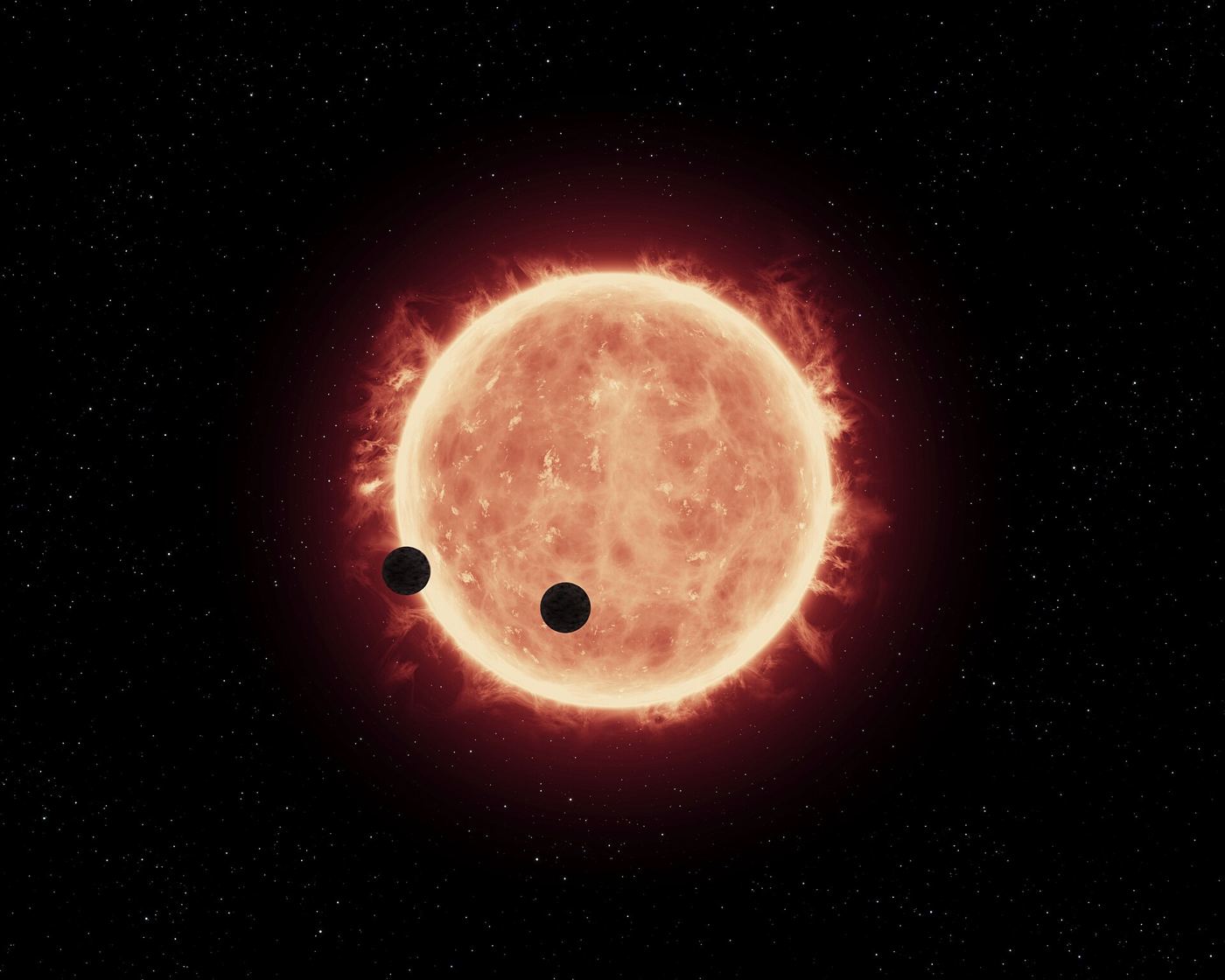
Astronomers have found the first known disappearing planet, a hot Jupiter whose transits stopped appearing because a hidden neighbour is tilting its orbit. The planet, TOI-2535 b, sits about 1,000 light-years away and whips around its star in only 8.25 days, ten times faster than Mercury circles the Sun. Researchers at the University of California, Los Angeles watched it transit its star many times over seven years, until the transits grew shorter and shallower and then stopped appearing altogether in 2026. The discovery was reported on 9 November 2026 in Astrophysical Journal Letters. The planet has not vanished at all: gravity from an unseen neighbouring planet is tilting its orbit, so it no longer passes in front of its star from our point of view.
What the Evidence Shows
The clue was in the timing. The transits of TOI-2535 b ran early or late by up to six hours, far more than a lone planet on a steady orbit would show. The team’s calculations show the two planets make each other’s orbits wobble like a top, circling their star obliquely and slipping out of alignment with Earth. It is the most extreme example of interacting planets seen so far, and the tilt is changing so fast that the transits disappeared while astronomers were watching. TOI-2535 b will next cross its star in 30 to 50 years, while its hidden neighbour may come into view sooner. The same wobbling explains why eclipses on Earth are rare, and the discovery shows how much a planet can hide even after seven years of watching. Reporting and analysis from sources such as Nature track the same developments, and specialists following the disappearing planet TOI-2535 b say the direction is now consistent across independent lines of evidence.
The Wider Context
The wider context is a research landscape in which replication and open data now decide reputations. Findings connected to the disappearing planet TOI-2535 b are being checked by independent groups with shared datasets, and the teams involved publish their methods in full so rivals can test every step. That discipline is slower than a headline cycle, but it is why results in this area increasingly survive first contact with scrutiny.
What Happens Next
What happens next in the story of the disappearing planet TOI-2535 b will be decided by follow-up work already under way: larger samples, longer observation and instruments that have not yet come online. The researchers involved are unusually united on one point, that the current results justify the next investment of time and money. Readers will not have to wait long for the first tests of that claim. You can follow related developments in our coverage of science.
None of this will be settled by a single announcement, study or product launch. The pattern to watch is accumulation: independent confirmations, honest reporting of failures and steady improvement in the underlying numbers. Readers who follow those signals, rather than the loudest claim of the week, will understand this subject better than most of the commentary surrounding it suggests is possible.