
How to Get Your First 1000 Players on a Game You Built Yourself
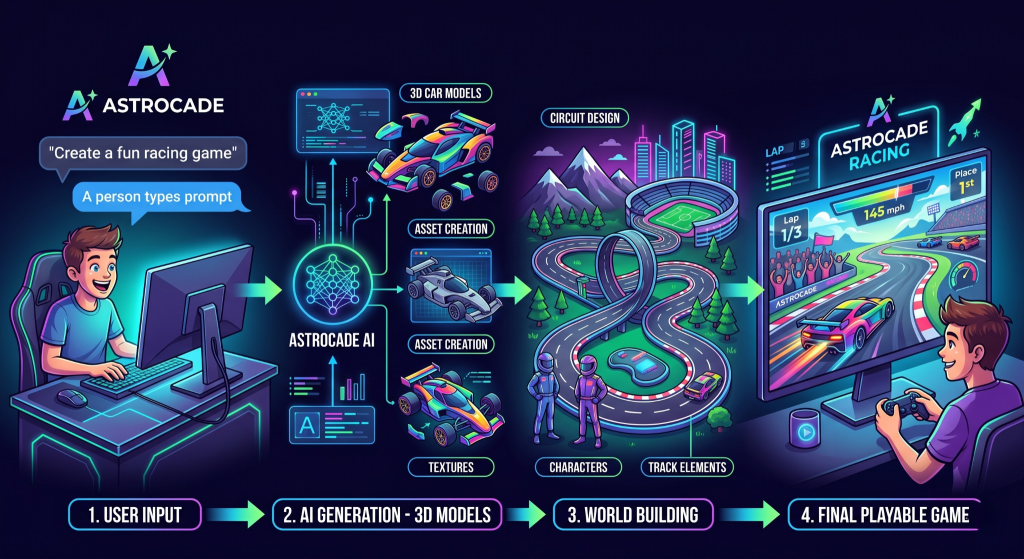
Building a playable game is a major achievement, but releasing it does not automatically bring players. Thousands of small games appear online every month, and many receive little attention—not because they are bad, but because their creators never developed a clear launch and promotion strategy.
Your first 1,000 players are unlikely to arrive from one viral post. They usually come from several smaller sources working together: friends, niche communities, short videos, creator outreach, searchable content, platform discovery, and recommendations from early players.
The goal is not to advertise everywhere. It is to identify the people most likely to enjoy your project, show them why it is worth trying, and make the first session easy to start.
This guide explains how to move from zero players to your first 1,000 through practical steps that a solo creator can realistically manage.
Start With a Game People Can Understand Quickly
Before promoting your project, make sure people can understand its main appeal within a few seconds.
A new visitor should immediately know:
- What the player does
- What makes the experience interesting
- What the main challenge is
- Whether it works on their device
- How they can start playing
Avoid describing your project through technical features alone. Players usually care less about the software used and more about the experience they will receive.
Compare these two descriptions:
“Built with custom systems, procedural events, and advanced progression mechanics.”
“Survive increasingly difficult rounds, unlock stronger abilities, and beat your previous score.”
The second version is clearer because it focuses on the player.
Write a one-sentence description that explains the central experience. Use that sentence consistently on your landing page, social profiles, promotional posts, and platform listings.
Make the First Minute Easy and Enjoyable
Promotion brings people to the project, but the opening experience determines whether they stay.
New players should not need to study a long instruction screen before doing something meaningful. Introduce controls gradually and allow people to learn through action.
During the first minute, the player should experience at least one of the following:
- A satisfying action
- A clear objective
- A visible reward
- A meaningful decision
- A sense of progress
- A small success
Ask several people to play without your help. Watch where they hesitate, click the wrong button, misunderstand an instruction, or lose interest.
Do not explain the solution while testing. Their confusion reveals what the design needs to communicate more clearly.
A polished opening can improve player retention more effectively than a larger advertising campaign.
Decide Who the First 1000 Players Should Be
Trying to promote a project to “everyone” usually produces weak results.
Your early audience should be specific enough that you know where to find them and what language will attract their attention.
Think about:
- The genre they already enjoy
- The device they commonly use
- Whether they prefer short or long sessions
- Their approximate age range
- The creators and communities they follow
- The feature that would make them click
For example, players interested in short competitive challenges respond to different messages than people who enjoy slow exploration or story-focused experiences.
Create a simple player profile:
“My ideal early player enjoys quick browser experiences, likes improving scores, and often discovers new projects through short videos and online communities.”
You do not need expensive market research. You only need a clear picture of the person most likely to enjoy what you have made.
Set Up a Simple Landing Page
Your landing page should reduce friction between interest and play.
It does not need to contain a long development history or detailed technical explanation. It should answer the most important questions immediately.
Include:
- A clear title
- A one-sentence description
- A visible play button
- A short gameplay video or animated preview
- Three key features
- Supported devices
- A screenshot or two
- A way to follow updates
- A feedback link
The play button should appear near the top of the page. Do not make visitors scroll through several sections before they can begin.
If the project requires a download, explain the file size, operating system, installation process, and any security warnings players may see.
The easier the first step feels, the more visitors will become actual players.
Give Yourself a Realistic 1000-Player Breakdown
A target of 1,000 can feel intimidating when treated as one large number. Break it into smaller acquisition channels.
A realistic early plan might look like this:
| Source | Player Target |
| Friends and personal network | 50 |
| Relevant online communities | 200 |
| Short-form videos | 250 |
| Small creators and streamers | 150 |
| Platform discovery | 150 |
| Searchable posts and articles | 100 |
| Player referrals | 100 |
| Total | 1,000 |
Your exact numbers will vary. The purpose of the table is to prevent dependence on a single platform.
If one source performs poorly, the others can still move the launch forward.
Begin With a Controlled Soft Launch
Do not send the project to hundreds of people immediately.
Start with 10 to 20 testers who are willing to provide honest feedback. Fix the most serious problems before expanding the audience.
During this stage, look for:
- Broken controls
- Confusing instructions
- Long loading times
- Unfair difficulty spikes
- Missing sound or visual feedback
- Problems on different screen sizes
- Reasons people stop playing
After these corrections, expand to approximately 50 to 100 players.
A soft launch protects your first impression. People are more likely to recommend a project that feels stable and understandable.
Use Short Gameplay Videos to Earn Attention
Gameplay is easier to understand when people can see it.
Create short vertical videos that show the most interesting moment immediately. Do not spend the first five seconds displaying a logo or explaining your development journey.
Open with:
- A difficult challenge
- A near failure
- A surprising result
- A satisfying interaction
- A high score
- A visible transformation
- A strong player reaction
Keep most videos focused on one idea.
Useful video formats include:
- “Can you beat this score?”
- “This level looks easy until this happens.”
- “I changed one mechanic and the entire experience improved.”
- “Most testers failed at this point.”
- “Here is what I built this week.”
- “Would you choose option A or B?”
Add a direct call to action, such as “Play it free” or “Try the challenge and share your score.”
One strong clip can bring hundreds of visitors, but consistent posting is more dependable than waiting for one viral result.
Share Development Stories, Not Only Promotions
Constantly asking people to play can feel repetitive. Instead, share the process behind the project.
People enjoy seeing how ideas change over time.
You can post about:
- A mechanic that did not work
- A design problem you solved
- Before-and-after visuals
- Feedback that changed a feature
- A bug that produced a funny result
- A level you removed
- A difficult development decision
- A milestone you reached
This content gives people a reason to follow the project before release.
It also helps creators who are interested in making games, while still showing potential players what makes the experience interesting.
Use Communities Carefully
Relevant communities can provide valuable early players, but direct self-promotion is often restricted.
Before posting:
- Read the community rules.
- Observe which posts receive positive responses.
- Participate in discussions.
- Share useful progress or lessons.
- Ask for specific feedback instead of demanding clicks.
A weak post says:
“I released my game. Please play it.”
A stronger post says:
“I am testing whether the first level explains the controls clearly. Could a few people try it and tell me where they became confused?”
Specific requests feel more genuine and often produce better feedback.
Do not post the same promotional message in dozens of communities. That approach can damage your reputation and lead to removals or bans.
Contact Small Creators Before Large Influencers
Large creators receive many requests and may ignore unknown projects. Smaller creators are often more accessible and may have highly engaged audiences.
Look for creators who regularly cover:
- Your genre
- Indie projects
- Browser experiences
- Short challenge-based content
- New releases
- Development experiments
Personalize every message.
Mention a specific video or stream that shows why the project fits their audience. Include a direct link, a short description, two or three images, and any useful access instructions.
Do not send a long autobiography.
A simple outreach message can follow this structure:
Hi [Name], I enjoyed your recent video about [specific topic]. I built a small project that may suit your audience because [clear reason]. It takes only a few minutes to try, and here is the direct link. No pressure to cover it, but I would appreciate any feedback.
Contact several relevant creators rather than depending on one major account.
Make Sharing Part of the Experience
Players are more likely to share when the project gives them something worth showing.
Useful sharing triggers include:
- Scores
- Completion times
- Rankings
- Unusual results
- Unlocks
- Custom creations
- Challenge codes
- Difficult achievements
After an important result, provide a simple invitation to share it.
Avoid interrupting the experience with constant requests. The best moment is immediately after the player feels successful, surprised, or competitive.
You can also create weekly challenges that give existing players a reason to return and invite others.
Applying the Strategy to the Provided Game
Fast Food Tycoon is a restaurant management simulation in which players build, operate, and upgrade a fast food business to earn profit. Its first-player campaign could focus on visible progression, difficult management decisions, impressive business transformations, and profit-based challenges. Short videos could show an early operation becoming highly successful, while community posts could invite players to compare earnings or complete a limited-time management objective.
Ask Early Players for Useful Feedback
“Did you like it?” rarely produces detailed information.
Ask questions that reveal specific design problems:
- What did you think you were supposed to do first?
- Was any instruction confusing?
- When did you feel most engaged?
- At what point did you consider stopping?
- Which part felt too easy or difficult?
- Would you play again?
- Would you recommend it to someone?
- What would you change first?
Organize responses by frequency and impact.
A problem reported by eight players deserves more attention than one unusual suggestion. However, a serious issue such as lost progress or an inaccessible control may require immediate action even if only one person reports it.
Track the Metrics That Actually Matter
Player count alone does not tell you whether the project is growing successfully.
Track a small group of useful measurements:
Landing-Page Conversion
What percentage of visitors start playing?
A low conversion rate may indicate that the description is unclear, the play button is difficult to find, or the loading process feels risky.
First-Session Completion
How many players reach an important early milestone?
A low rate may reveal confusion, technical issues, or weak onboarding.
Return Rate
How many players return after their first session?
Returning players are a strong sign that the core experience has lasting appeal.
Referral Rate
How many new visitors arrive through player recommendations?
This indicates whether people consider the project worth sharing.
Traffic Source
Which posts, communities, creators, or search results bring engaged players?
Do more of what attracts the right audience, not merely the largest number of clicks.
Improve Retention Before Increasing Promotion
Suppose 1,000 people visit, but almost everyone leaves within two minutes. At that point, more promotion may increase the number on your dashboard without building a real audience.
Before expanding your campaign, improve the reasons players stay.
Common retention improvements include:
- Shorter loading times
- Clearer goals
- Faster rewards
- Better sound and visual feedback
- Smoother controls
- More balanced difficulty
- Visible progress
- New challenges
- Reasons to return
The first 1,000 players should help you build a stronger experience, not simply produce a vanity metric.
Run Small Events and Challenges
Events give promotion a reason and a deadline.
Instead of posting “Play my project,” announce something specific:
- A weekend score challenge
- A seven-day leaderboard
- A speedrun competition
- A community milestone
- A creator-versus-player challenge
- A new level test
- A limited reward
Events work because they transform passive discovery into participation.
Keep prizes simple and sustainable. Recognition, featured names, special roles, downloadable art, or access to future tests may be enough for an early community.
Use Searchable Content for Long-Term Discovery
Social posts disappear quickly. Searchable content can continue attracting visitors after publication.
Write useful pages related to the project’s genre, mechanics, or development process. These might include beginner guides, strategy tips, design lessons, or behind-the-scenes explanations.
A creator learning how to make your own game may discover the development story, while a genre fan may find a strategy article and then try the project.
Search-based traffic usually grows slowly, but it can become a stable source of new players over time.
Choose Tools That Help You Launch, Not Just Develop
The platform you use should make testing, publishing, updating, and sharing easier.
A game builder can be valuable when it reduces technical setup and allows quick iteration.
An AI game maker may help produce early systems or prototypes, but the creator must still test whether the result is enjoyable.
A game maker online can also reduce installation barriers, especially when the audience prefers browser-based access.
For creators with limited technical experience, a no-code game maker may shorten the path from idea to public testing.
The important question is not whether the tool looks advanced. It is whether it helps you build a game, publish it reliably, and respond quickly to player feedback.
Some beginners search for phrases such as create game because they want the fastest possible starting point. Speed is useful, but only when the platform also supports the intended audience and release format.
How Astrocade Can Support Early Creators
Astrocade helps lower the barrier between an idea and a playable experience.
For a creator trying to create a game, faster prototyping means more time can be spent testing mechanics, improving clarity, and learning from actual players.
This matters because the first 1,000 players usually come through repeated improvement rather than one perfect launch.
A creator can publish an early version, observe where users struggle, improve the central experience, and release updates without first building a complicated technical pipeline.
Accessible creation tools do not replace promotion. They make it easier to act on the feedback promotion generates.
A Practical 30-Day Player Acquisition Plan
Days 1–5: Prepare the Project
- Test the opening experience
- Fix obvious technical problems
- Write a clear one-sentence description
- Prepare screenshots
- Record short gameplay clips
- Create a simple landing page
- Add analytics
Days 6–10: Run a Private Test
- Invite 10 to 20 people
- Observe their first sessions
- Collect specific feedback
- Fix the most common issues
- Improve instructions and loading
Days 11–15: Begin the Soft Launch
- Expand to 50 to 100 players
- Post in one or two relevant communities
- Publish several short videos
- Track where players leave
- Collect quotes and reactions
Days 16–20: Expand Distribution
- Contact small creators
- Publish behind-the-scenes content
- Add a shareable result or challenge
- Improve the platform listing
- Post in additional relevant communities
Days 21–25: Create a Community Event
- Launch a leaderboard or challenge
- Encourage players to share results
- Feature top participants
- Release a small improvement
- Ask existing players to invite one friend
Days 26–30: Review and Repeat
- Compare traffic sources
- Identify the best-performing content
- Remove weak promotional tactics
- Improve player retention
- Repeat the strongest campaign
You may not reach exactly 1,000 within 30 days, and that is not a failure. A smaller group of engaged players is more valuable than a large number of visitors who immediately leave.
Final Thoughts
Getting the first 1,000 players is primarily a process of clarity, testing, distribution, and improvement.
Make the central experience understandable. Remove friction from the opening session. Identify a specific audience. Show the project through short gameplay content. Participate in relevant communities. Contact small creators. Give players something worth sharing.
Most importantly, treat early players as partners in development rather than numbers on a dashboard.
Their behavior will reveal what your promotional posts cannot. They will show where the experience becomes confusing, when it becomes enjoyable, and whether it gives people a reason to return.
Your first 1,000 players do not need to arrive all at once. They need to arrive through channels you can understand, improve, and repeat.